Contact
Stichting Service Logistics Forum
info@servicelogisticsforum.nl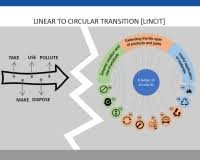
This study frames the circular transition as a continuous learning process with several decision-making points that are more complicated than a binary choice between linear or circular initiatives. This research is executed within the project “Transitioning to a Circular Business Ecosystem” (LINCIT) that is part of the TKI Dinalog Topsector Logistiek 2022-2026 call.
Dealing with Contradictions in Simultaneously Managing Linear and Circular Business Models in the Circular Transition
Companies are increasingly urged to adopt circular practices in today's rapidly evolving business landscape. As the transition from linear to circular business models will not happen overnight, companies need to manage both linear and circular models in parallel to make the circular transition successfully. Our study discusses the continuous learning practices required to navigate the inherent tensions between the established linear and the new circular business model.
Throughout the earlier phases of the circular transition, companies face employees’ cognitive resistance toward change. Thus companies need to shift employees’ mindsets from a linear to circular logic. Following the overcoming of this cognitive aspect of the transition, balancing the allocation of resources between linear and circular business models is crucial as tensions arise when deciding to invest in new business models. Companies should strategically manage their resources to support both business models without compromising efficiency and effectiveness. Finally, gaining legitimacy for new circular practices while the existing linear business model is still credible among the company’s network and customers leads to further tensions. Companies must engage stakeholders in developing the new business model to gain trust and support for the transition.
This study frames the circular transition as a continuous learning process with several decision-making points that are more complicated than a binary choice between linear or circular initiatives. Throughout the transition, companies learn how to understand and react to tensions between linear and circular business models, aiming for a successful circular transition.
This research is executed within the project “Transitioning to a Circular Business Ecosystem” (LINCIT) that is part of the TKI Dinalog Topsector Logistiek 2022-2026 call. The mission of LINCIT (LINear to CIrcular Transition) is to guide companies operating a linear supply chain to transition to a circular business ecosystem, and organize the associated logistics and operations. The project is lead by Eindhoven University of Technology and executed in collaboration with NHL Stenden University of Applied Sciences, HU University of Applied Sciences, and Wageningen University & Research, and more than thirty industry and valorization partners (of which SLF).
Are you interested in this particular study and willing to participate in an interview, please contact us via n.raassens@tue.nl (Néomie Raassens, project leader LINCIT).











![DHL Supply Chain [Netherlands] BV](https://www.servicelogisticsforum.nl/storage/cache/images/579203eb4b327_dhl-1--1-w250-h125.jpg)